At a teaching hospital in Abuja, a new system of wireless patient monitors is quietly changing how nurses track vital signs. Instead of walking from bed to bed to record blood pressure and oxygen levels on paper, the data now flows in real time to a central dashboard. Alerts fire the moment a reading falls outside safe limits. The ward feels the same, but the speed at which staff can respond to a deteriorating patient has changed dramatically.
This is the Internet of Things (IoT) at work in healthcare. IoT refers to the network of physical devices, including monitors, infusion pumps, wearable sensors, smart fridges for blood and vaccine storage, even connected CCTV cameras, that collect and exchange data over the internet or a local network. Globally, the healthcare IoT market continues to grow at pace. In Nigeria, the adoption is still in its early stages, but it is accelerating. According to the Federal Ministry of Health, 76% of the country's federal tertiary health institutions now have varying levels of digitisation, and IoT devices are becoming part of that picture.
For hospitals, the promise is significant: better patient outcomes, fewer manual errors, and lower operational costs. But there is another side to this story. Every connected device is also a potential entry point for attackers. And in a country where power supply is inconsistent, internet connectivity remains patchy, and cybersecurity awareness is still growing, the risks deserve serious attention.
hospitals are digitised
a known vulnerability
healthcare data breach
What IoT Looks Like in Hospitals World-Wide
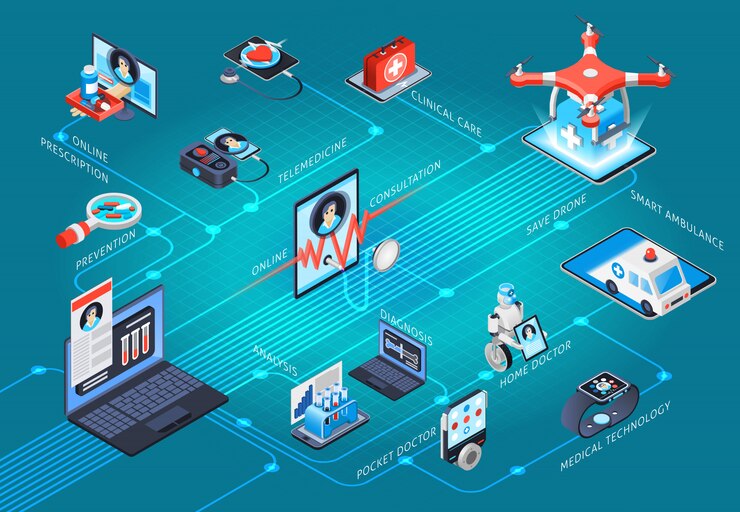
IoT in a hospital setting goes well beyond smartwatches and fitness trackers. In Nigerian hospitals that have begun adopting these technologies, the applications include:
- Remote patient monitoring. Wearable sensors track heart rate, blood glucose, temperature, and oxygen saturation, transmitting data to caregivers in real time. This is especially valuable for managing chronic conditions in patients who live far from the facility.
- Smart infusion pumps. Connected pumps that automatically adjust medication dosages and flag anomalies before they reach the patient.
- Cold chain monitoring. IoT sensors in refrigerators used for blood products, vaccines, and medications can alert staff immediately when temperatures drift outside safe ranges, preventing costly waste.
- Asset tracking. RFID tags and sensors help hospitals locate equipment like wheelchairs, defibrillators, and portable monitors across large facilities, reducing the time staff spend searching for critical items.
- Telehealth and home care. IoT-enabled devices allow patients to be monitored at home after surgery or during long-term treatment, reducing hospital readmissions and freeing up bed space.
During the COVID-19 pandemic, the role of IoT became even more visible. Hospitals that had telehealth infrastructure could continue monitoring patients remotely when in-person visits became risky. Post-pandemic, many of those systems have stayed in place, and more hospitals are investing in them.
The Pros: Why IoT Matters for Nigerian Healthcare
When implemented well, IoT can address several challenges that Nigerian hospitals face daily:
- Faster clinical decisions. Real-time data means doctors and nurses do not have to wait for manual recordings. A deteriorating patient triggers an alert instantly, allowing the care team to intervene earlier. In critical care, those minutes make a measurable difference.
- Fewer medical errors. Manual transcription of vital signs is error-prone. IoT devices feed data directly into electronic medical records, reducing the risk of misread handwriting, missed readings, or transposed numbers.
- Lower operational costs over time. Automated monitoring reduces the number of staff hours spent on routine observations. Cold chain sensors prevent medication spoilage. Asset tracking reduces equipment loss. These savings compound.
- Improved access in underserved areas. Nigeria's healthcare workforce is stretched thin, particularly in rural regions. IoT-enabled remote monitoring allows specialists in urban centres to oversee patients hundreds of kilometres away, extending quality care beyond city limits.
- Better compliance and recordkeeping. Connected devices generate timestamped, tamper-resistant logs that make it easier for hospitals to meet regulatory requirements under the Nigeria Data Protection Act (NDPA) and the National Health Act.
Every connected device that improves patient care is also a device that needs to be secured, updated, and monitored, just like any other entry point on your network.
The Cons: Risks That Cannot Be Ignored
The benefits are real, but so are the risks. For Nigerian hospitals, these challenges are not hypothetical. They are present and growing:
- Expanded attack surface. Every IoT device added to a hospital network is another endpoint an attacker can target. Many medical IoT devices run outdated firmware, use default passwords, and lack the ability to install security patches. Research shows that over half of connected medical devices contain at least one known vulnerability.
- Data privacy concerns. IoT devices collect highly sensitive patient data: vital signs, medication schedules, location within the facility. If this data is intercepted, stored insecurely, or shared without consent, the hospital faces legal liability under the NDPA and a serious breach of patient trust.
- Infrastructure gaps. IoT devices depend on stable power and reliable internet connectivity. In many parts of Nigeria, both remain inconsistent. A monitoring device that loses connectivity during a critical moment is worse than no device at all because staff may assume it is still working.
- Internal threats. Research specific to Nigeria highlights that internal threats, including actions by insiders such as technicians or procurement staff who either intentionally or unintentionally compromise IoT systems, are compounded by limited cybersecurity awareness and weak governance structures within institutions.
- Interoperability challenges. Devices from different manufacturers often use different protocols, making it difficult for hospitals to create a unified, secure network. When systems cannot communicate properly, blind spots emerge, and workarounds are introduced that often bypass security controls.
- Cost of implementation. The upfront investment in IoT infrastructure, including devices, networking, integration with existing EMR systems, and ongoing maintenance, can be significant. For hospitals already working with tight budgets, the cost may be prohibitive without clear evidence of return on investment.
Securing IoT in Your Hospital
The answer is not to avoid IoT. The technology is coming regardless, and the hospitals that prepare will be better positioned than those that react after an incident. Here are practical steps any Nigerian hospital can begin taking today:
- Maintain an inventory. You cannot protect what you do not know exists. Document every connected device on your network, including its firmware version, default credentials, and the data it handles.
- Segment your network. IoT devices should sit on a separate network segment from your core clinical systems. If a smart camera or sensor is compromised, the attacker should not be able to move laterally into your EMR or patient database.
- Change default credentials. This sounds basic, but it is one of the most common oversights. Every device should have unique, strong passwords from the moment it is deployed.
- Patch and update regularly. Work with your vendors to ensure devices receive firmware updates. If a device cannot be updated, assess whether the risk of keeping it on the network is acceptable.
- Monitor device behaviour. Unusual traffic from an IoT device, such as sudden spikes in data transmission or communication with unknown external addresses, can be an early indicator of compromise.
- Include IoT in your incident response plan. If a connected device is compromised, does your team know how to isolate it without disrupting patient care? Plan and rehearse this scenario.
Looking Ahead
Nigeria's digital health strategy is accelerating. The government's Nigeria Digital Health Strategy and the Nigeria Digital in Health Initiative (NDHI) are driving investment in connected health infrastructure across the country. As more hospitals come online, the intersection of IoT and cybersecurity will become one of the defining challenges of Nigerian healthcare in the years ahead.
The hospitals that get this right will not be the ones with the most devices. They will be the ones that treat every new connected device as both a clinical tool and a security responsibility, building the policies, the training, and the infrastructure to support both.
Connected care is the future. Secure connected care is the goal.