In a radiology department at a private hospital in Lagos, a new AI tool is helping doctors read chest X-rays. The software flags abnormalities; potential nodules, signs of tuberculosis, fluid in the lungs, and highlights them on screen before the radiologist begins their review. It does not replace the doctor. But it catches things a tired pair of eyes might miss at the end of a twelve-hour shift.
This is one small example of how artificial intelligence is entering healthcare. Across hospitals in Nigeria and around the world, AI is being adopted for tasks ranging from diagnostic imaging and drug discovery to patient scheduling and predictive analytics. The technology promises to make healthcare faster, more accurate, and more accessible, particularly in countries where the number of trained clinicians is far smaller than the population that needs them.
But AI also introduces risks that hospitals cannot afford to ignore. From cybersecurity vulnerabilities and data privacy concerns to questions of bias and accountability, the technology demands careful governance. For Nigerian hospitals, where infrastructure is still developing and regulatory frameworks in healthcare is non-existent, getting this balance right is critical.
How AI Is Being Used in Healthcare
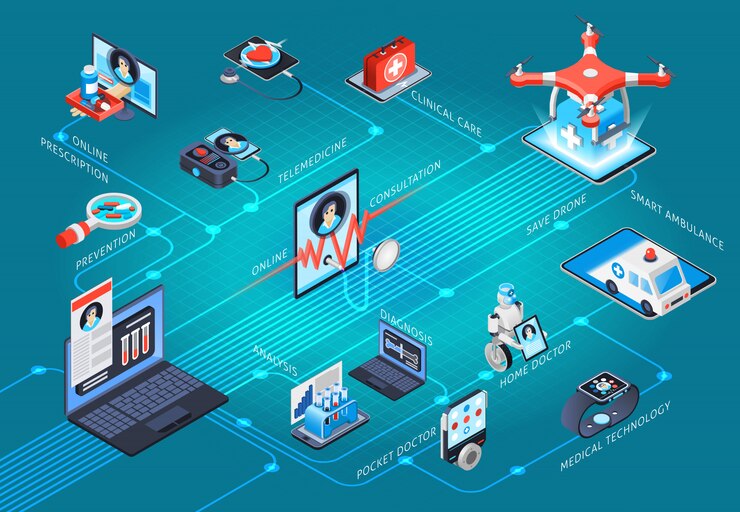
AI in healthcare is not a single technology. It is a broad category that includes machine learning, natural language processing, computer vision, and predictive modelling. In practice, hospitals are using these capabilities in several key areas:
- Diagnostic imaging. AI algorithms analyse X-rays, CT scans, MRIs, and retinal images to detect conditions such as cancer, fractures, and diabetic retinopathy. In settings where specialist radiologists are scarce, this can significantly speed up diagnosis.
- Clinical decision support. AI systems can review patient data, lab results, and medical histories to suggest treatment options, flag drug interactions, or predict the likelihood of complications. These tools support clinicians rather than replace them.
- Predictive analytics. Hospitals use AI to predict patient deterioration, forecast bed occupancy, anticipate disease outbreaks, and identify patients at high risk of readmission, allowing care teams to intervene earlier.
- Administrative automation. Natural language processing can automate clinical documentation, transcribe consultations, and handle appointment scheduling, freeing clinicians to spend more time with patients.
- Drug discovery and research. AI accelerates the identification of potential drug candidates and can analyse vast datasets from clinical trials far faster than manual review allows.
- Cybersecurity defence. AI models help hospitals detect phishing emails, identify anomalous network behaviour, and flag suspicious login patterns in real time, strengthening defences against an increasingly sophisticated threat landscape.
The Benefits: Why Healthcare Needs AI
For Nigerian hospitals facing workforce shortages, limited infrastructure, and growing patient demand, AI offers practical value:
- Extending specialist reach. Nigeria has roughly four doctors per 10,000 people. AI tools that support diagnostics and decision-making allow fewer specialists to serve more patients, particularly in rural areas where access to specialist care is limited.
- Reducing diagnostic errors. AI does not get fatigued. In high-volume settings, it can serve as a second pair of eyes, catching abnormalities that might be missed during long shifts.
- Improving operational efficiency. Automated scheduling, documentation, and resource forecasting reduce administrative burden and help hospitals allocate resources where they are most needed.
- Strengthening cybersecurity. AI-powered security tools can monitor networks around the clock, detecting threats faster than any human analyst. They can identify phishing attempts, flag unusual data access patterns, and respond to incidents in real time.
- Enabling preventive care. Predictive models can identify patients at risk of chronic disease progression, enabling earlier intervention and reducing the burden on acute care services.
The Risks: What Can Go Wrong
The same power that makes AI useful also makes it dangerous when deployed without proper safeguards. Healthcare leaders need to understand these risks clearly:
- Data privacy and security. AI systems require large volumes of patient data to function. This data: medical histories, lab results, imaging, genomic information, is among the most sensitive information that exists. If AI tools are not properly secured, they become high-value targets for attackers. The risk is amplified when clinicians use unsanctioned AI tools that lack encryption and audit trails, exposing sensitive data to external platforms.
- AI-powered cyberattacks. Attackers are using AI too. AI-driven phishing campaigns are now three times more effective than traditional ones, producing messages with perfect grammar, convincing branding, and personalised details. Ransomware that disables diagnostic AI can force hospitals into impossible choices between patient safety and ransom payment.
- Bias in AI models. AI systems learn from the data they are trained on. If that data under-represents certain populations - which is often the case for African patient populations, the AI may produce less accurate results for those groups. In healthcare, a biased model is not just unfair; it is clinically dangerous.
- Lack of transparency. Many AI models operate as "black boxes," producing outputs without clear explanations of how they arrived at their conclusions. For a clinician, trusting a recommendation they cannot understand or interrogate is a significant governance and liability concern.
- Regulatory gaps. Nigeria's regulatory framework for AI in healthcare is still evolving. The Nigeria Data Protection Act (NDPA) provides a foundation for data governance, but specific guidance on AI deployment, model validation, and algorithmic accountability in clinical settings is limited. Hospitals that adopt AI without clear policies risk both compliance failures and patient harm.
- Infrastructure dependency. AI tools typically require reliable internet connectivity, consistent power supply, and significant computing resources. In many Nigerian hospitals, these remain challenges. An AI system that fails during a critical diagnostic moment can delay care and erode clinician trust in the technology.
Best Practices for Adopting AI Safely
AI adoption in healthcare should be deliberate, not rushed. The hospitals that benefit most from AI will be those that adopt it with clear governance from the start. Here are practical steps:
- Start with a clear use case. Do not adopt AI for its own sake. Identify a specific clinical or operational problem, assess whether AI is the right solution, and define measurable outcomes before deployment.
- Vet your vendors thoroughly. Before integrating any AI tool, understand how it handles patient data. Where is the data stored? Is it encrypted in transit and at rest? Does the vendor comply with the NDPA? Can the hospital audit how the model uses its data?
- Establish an AI governance policy. Define who approves AI tools, how they are validated, and how they are monitored once deployed. Include clear accountability for decisions made with AI assistance.
- Address shadow AI. Nearly a quarter of clinicians are already using unsanctioned AI tools. Rather than banning them outright, provide approved alternatives that meet security and compliance requirements, and train staff on the risks of using unapproved platforms.
- Invest in training. Clinicians, IT staff, and administrators all need to understand what AI can and cannot do. Training should cover both the clinical applications and the security implications of AI tools.
- Demand transparency from AI systems. Prioritise tools that can explain their reasoning. If a model flags a scan as abnormal, the clinician should be able to see why. Explainability is not optional in healthcare.
- Plan for failure. No AI system is infallible. Ensure that clinical workflows can function without the AI tool if it fails, produces unreliable results, or is taken offline for updates.
- Include AI in your cybersecurity strategy. AI tools are part of your attack surface. Include them in your risk assessments, vulnerability scans, and incident response plans. Monitor them for unusual behaviour just as you would any other networked system.
The Path Forward
AI is not a future technology in healthcare. It is here now, and its role will only grow. For Nigerian hospitals, the question is not whether to adopt AI but how to do so responsibly. The institutions that get this right will be those that treat AI as both a clinical tool and a security responsibility - investing in governance, training, and infrastructure alongside the technology itself.
The goal is not to adopt AI faster than everyone else. The goal is to adopt it well.
- Start with a specific problem -- do not adopt AI for its own sake. Identify a clinical or operational need and define measurable outcomes before deployment.
- Vet vendors on data handling -- confirm encryption, NDPA compliance, data residency, and audit capabilities before integrating any AI tool.
- Establish governance early -- define who approves AI tools, how they are validated, and who is accountable for AI-assisted decisions.
- Address shadow AI proactively -- provide approved alternatives rather than banning unsanctioned tools outright, and train staff on the risks.
- Demand explainability -- prioritise AI systems that can show their reasoning. Black-box models are a governance and liability risk in clinical settings.
- Include AI in your security posture -- treat AI tools as part of your attack surface. Include them in risk assessments, vulnerability scans, and incident response plans.
Smarter care starts with smarter security.